VANGUARD - Expressing the viewpoint of the Communist Party of Australia (Marxist-Leninist)
For National Independence and Socialism • www.cpaml.org
(Above: source https://worldnews.whatfinger.com)
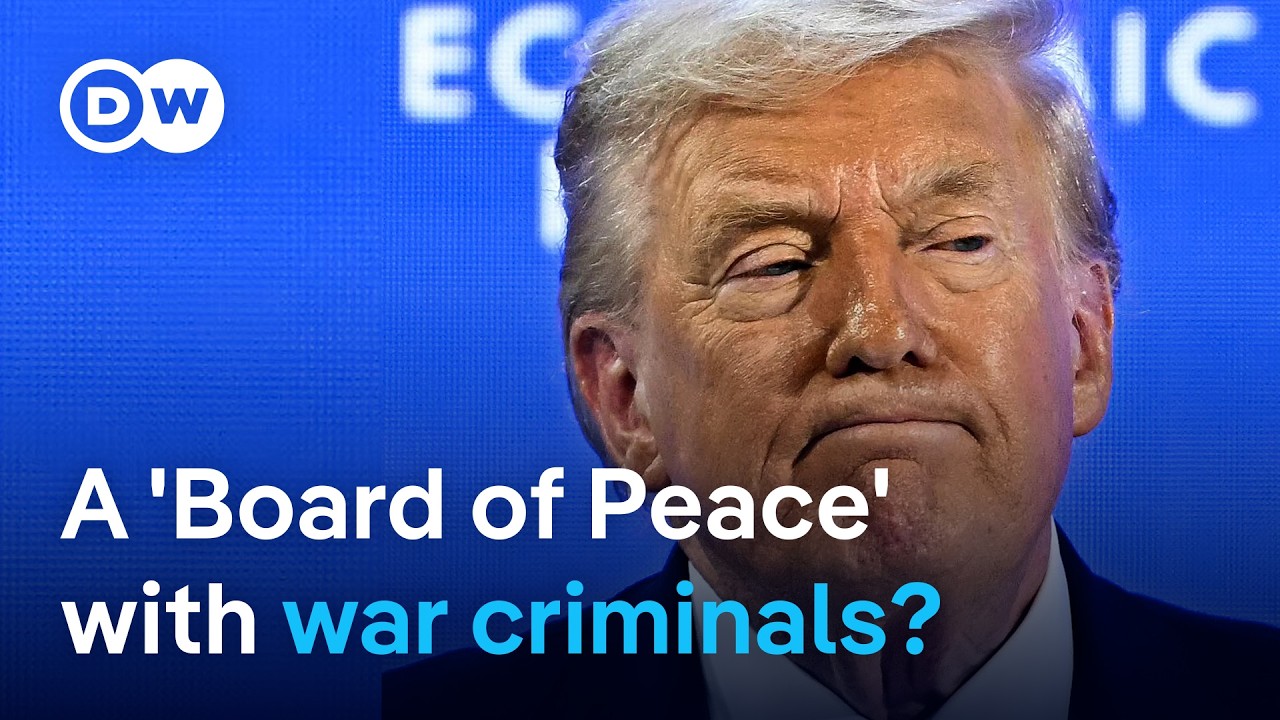
A decision, by the Trump administration, to establish a Board of Peace, has carried all the hallmarks of the creation of a secret cabal to further 'US interests'. It aims to by-pass already existing international institutions, raised serious questions about the hidden agendas of those associated with the Trump administration and their accountability.
Following the announcement of the so-called Phase Two of the Israel-Gaza 'peace initiative', the Trump administration launched its Board of Peace. Requesting an entry fee of $1.5 billion, the presidential administration did not provide any answers about what the financial outlay would be used for. In fact, the whole venture has raised serious doubts about the US diplomatic position and its objectives. Gaza, for example, was not even mentioned in the launch of the Board.
The founding Charter of the Board, for example, stated that it 'seeks to promote stability, restore dependable and lawful governance and secure enduring peace in areas affected or threatened by conflict'. (1)
The Charter was subsequently forwarded to sixty different countries although received with some noted diplomatic and political concerns. (2) The fact that Israeli PM Benjamin Netanyahu quickly announced his acceptance of the invitation to join the Board remains evidence, in itself, of the chosen agenda of the Trump administration. War crimes appear to not be a disqualification for membership.
One noted reaction to the Charter has included reference to European countries and others, including Australia, as possessing 'complicated ratification procedures involving pluralistic democracies, rather than nations run by a strong man or wealthy family, which characterises most of the volunteers so far'. (3)
The proposal comes at a time when questions and doubts have arisen about Trump; one of those close to him has already noted 'seeing a significant decline in the president's mental fitness'. (4) It is difficult for a sensible observer to take his changeable behaviour seriously.
It is also not particularly difficult to find examples of his confused and totally unreliable thinking and low attention span, which can often be symptomatic of mental health problems.
Coming so soon after the Trump debacle at the World Economic Forum where his rambling 72-minute speech included numerous confused references to Iceland in place of Greenland, moves by the Trump administration to use the Board of Peace 'as an alternative to the UN', has revealed further grandiose diplomatic positions more in line with idle-thinking and pipe-dreams than tangible and realistic planning with an agreed policy for implementation. (5)
It is, however, important to place Trump into the correct category: he is not a sole political leader; he is a figurehead for the most reactionary side of Wall Street and their military-industrial complex. They are also frantic; the rise of China as a competitor has threatened their position. They still, moreover, have considerable influence over the White House and Pentagon; they, therefore, seek an aggressive foreign policy and war as a means of boosting their profits. The UN is regarded as an obstacle.
They also have a long history of connivance.
The roots of the present diplomatic impasse between the US and Venezuela, for example, lie in developments in the southern half of the Americas over forty years ago. Decisions taken by the Contadora bloc consisting of Mexico, Colombia, Venezuela and Panama, in January 1983, laid the basis for the right to protect sovereignty and self-determination over and above the US-imposed Monroe Doctrine. The US reaction to the move, led by Fred Ikle, Under Secretary of Defence for Policy, was to announce it was not in US interests to allow new regimes not to the liking of Washington to emerge. The policies of the US backyard?
The threats by Ikle were soon acted upon with the US invasion of Grenada in October 1983. It followed assessments by the Pentagon and their intelligence services that the small island was a base for regional subversion. Washington and the Pentagon, however, over-reacted: the small island with only 105,000 population and their main export crop being nutmeg, had merely sought an independent domestic and foreign policy.
Over four decades later, however, it is not difficult to observe the southern half of the Americas as moving away from US influence with economic links to the BRICs.
The Middle East, likewise, has also seen a number of countries surrounding Israel join, or be associated with BRICs. Strangulation, encirclement and containment, for Tel Aviv, is likely at some point in the future.
The BRICs summit later this year will also provide a forum for other related 'surprises', including moves away from the primacy of the US dollar as an international trading currency. It will hit Washington hard. How the Trump administration respond will be worth noting, coming shortly before the mid-term elections in November.
In conclusion, it is important to note the response to the creation of the Board of Peace European diplomatic circles. They noted 'it reads like membership of an upscale golf club'. (6) They did not comment on the agendas; diplomatic silence should be noted
To date, furthermore, there has been no response from Canberra:
We need an independent foreign policy!
1. Trump fiercely promotes his board, Australian, 22 January 2026.
2. Concerns over Gaza 'Board of Peace' with $1.5 bn membership, Australian, 20 January 2026.
3. Australian, op.cit., 22 January 2026.
4. See: Former Trump lawyer says he has dementia, Sarah K. Burris, Alternet, 21 January 2026.
5. The tale of two Trumps: Good, Bad and Bluster, The Weekend Australian, 24-25 January 2026; and, Australian, op.cit., 22 January 2026.
6. Australian, ibid., 22 January 2026.