
Workers’ real wage decline - a storm is brewing
Written by: Ned K. on 12 November 2026
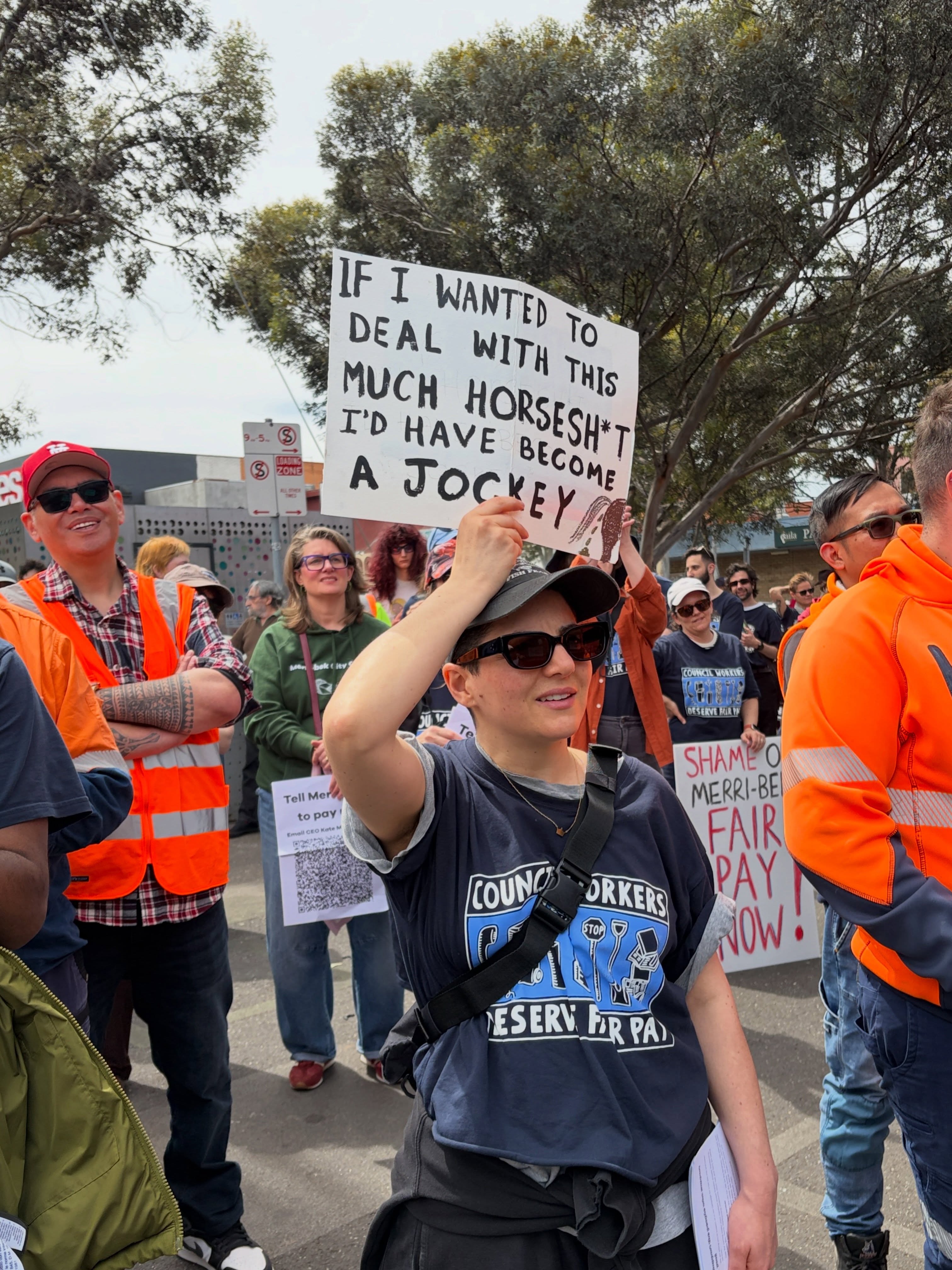
(Workers have the right attitude to bosses' "offers". Source: ASU Facebook page)
The federal government Department of Employment and Workplace Relations produces a quarterly Report "Trends in Federal Enterprise Bargaining". The latest Report is for the June quarter 2026. The Report provides Average Annualised Wage Increases (AAWI) for Enterprise and Multi-Employer Agreements.
As of 30 June 2026, there were 9,330 Agreements that collectively had AAWI of 4%.
With interest rates, inflation rate and fuel costs exceeding an average of 4%, the hundreds of thousands of workers covered by these 9,330 Agreements had no real wage increase at all.
The Report also provides the Average Annualised Wage Increases for Public and Private Sectors. The Public Sector AAWI was 4.1% and the Private Sector 3.9%.
While these Agreements as a whole are averaging wage increases of about 4% per year, the minimum Award wage increases recently have been above 4%. One of the selling points of the enterprise bargaining system imposed on workers in the early 1990s by the ALP government of the day was that it enabled workers "at the enterprise level" to receive above Award wages. Over time the above Award wage component of many enterprise agreements has contracted which has increased the number of workers falling into the category of the "working poor".
There have been some exceptions to the declining wage increases in enterprise agreements. Aged Care workers fought for and won a 28% wage increase over two years, and Early Childhood Education workers won 15% wage increases in the same year, but only after threatening a national strike. Some State government workers also won significant wage increases due to industrial action leading up to State parliamentary elections. Despite these wins, the average annual wage increases across all sectors just touched 4%.
Increased Workloads
Workers in most industries experience actions by employers which are designed to recover any wage increases by increasing workloads of workers. This is achieved by many different methods such as reducing staff levels, not replacing workers on leave, changing rosters or replacing workers with machinery, outsourced labour or new technology (AI).
Right To Strike
Whether workers are employed under the minimum Award or a registered Agreement or a common law individual contract, there is no legal right to withdraw their labour if their employer decides to increase their workload one way or another.
The ALP government and the ACTU are well aware of this but there is no campaign by the ACTU on behalf of all workers in all industries to enforce even the International Labor Organisation Convention on the Right to Strike.
The time is rapidly approaching when workers will think "to hell with the risk of fines" it's time to take action to defend and improve not only their real wages but their working conditions as well. Such a movement by workers will inevitably occur with or without the support of their established Unions. The actions of the federal (supported by states) governments against the construction workers union occurred with the agreement of the ACTU and most affiliates.
One could genuinely say to them "be careful what you wish for"!
Print Version - new window Email article
-----
Go back
Articles
| Workers’ real wage decline - a storm is brewing |
| Hypocrisy at COP31 |
| “The situation is becoming increasingly dire”: Report from Gaza |
| Report from comrades in Afghanistan to the CPA (M-L) |
| HungryPanda murder: The gig economy must be strongly regulated and its workers protected. |
| Report on the 6th ICOR America Conference, Peru 2026 |
| Osborne Shipyard AUKUS Nuclear Submarines - Are They "Done and Dusted"? |
| Technology bosses behind the drive to fascism |
| This social system must go! |
| US pushes QUAD to counter China’s southern diplomacy |
| Declaration by ICOR (Europe) Transnational Days of Action and Strikes: The youth rebellion is justified! Forward to the workers’ offensive! |
| Capitalist credit Pt 2: Their word is your bond |
| Capitalist credit Pt 1: This little piggy went to market… |
| SA’s OZASIA Festival Scrapped |
| Capitalism denies the systemic basis of mental health problems |
| Can the credit bubble be stopped from bursting? |
| Manufacturing industry does not need AUKUS nuclear subs - independence for Australia |
| Report on Boorloo/Perth’s Anti-War Week |
| The US war with Iran – Trump’s military debacle |
| The U.S. government, the Pentagon and big tech: key components of U.S. imperialism. Part 3 |
-----