
US developing kinetic and non-kinetic weapons for space war
Written by: Nick G. on 17 August 2026
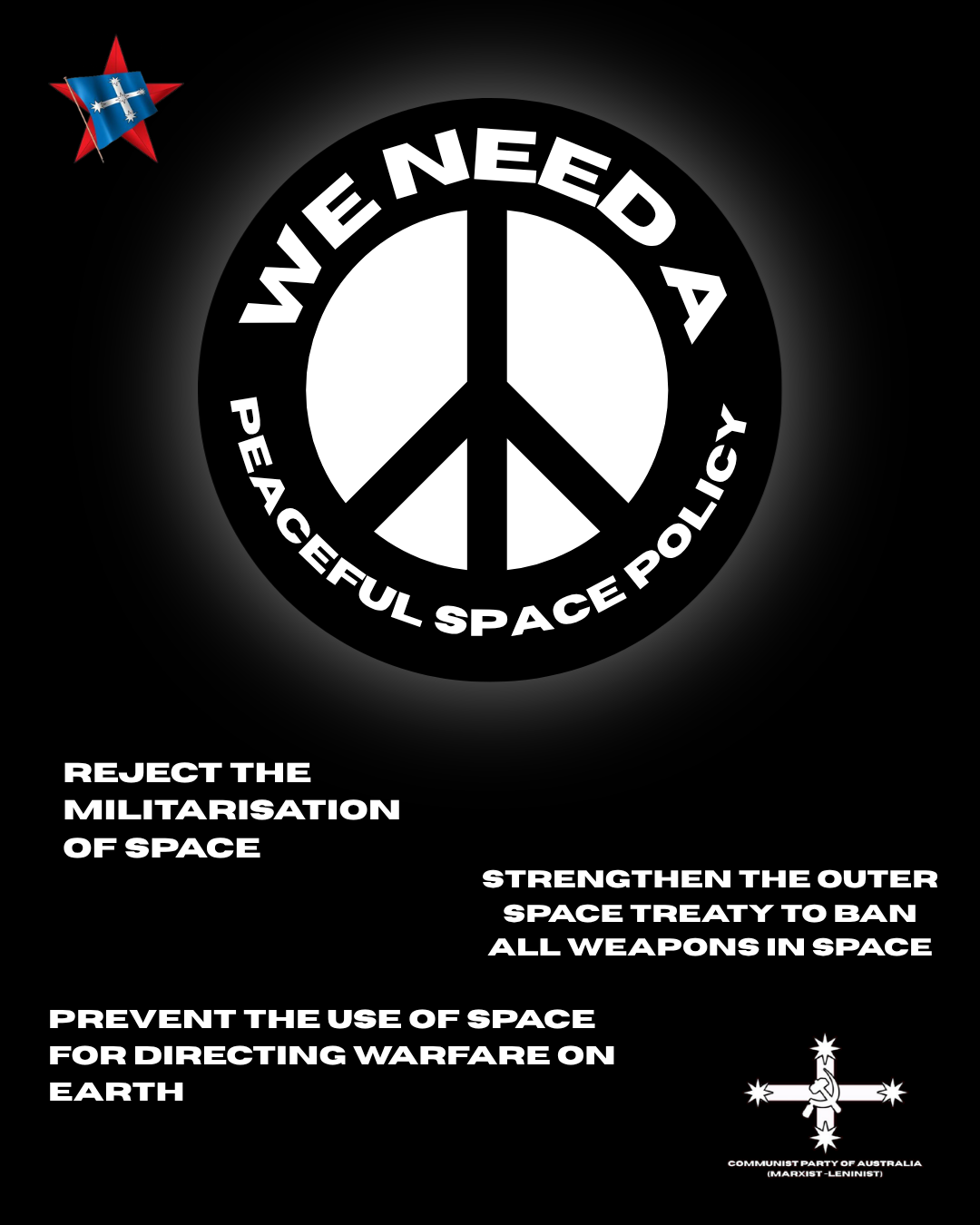
With China and the US locked in a race to be the first to establish a manned base on the Southern Pole of the Moon, the US is making no secret of its plans to establish its space supremacy by military means.
We have reported on US objectives in the past, but it is worth repeating with every new expression of the US intention to militarise space.
The latest comments came on August 12 2026 at the US Army Space and Missile Defense Symposium in Alabama.
US Space Command (SPACECOM) head Gen. Stephen Whiting, told attendees that SPACECOM’s top two priorities for fiscal 2029 through to 2033 are “integrated space fires” and capabilities to counter large constellations of satellites in low Earth orbit (LEO) in order to establish space superiority.
“We’re a combatant command and we fight to win wars. To win, we need credible, acknowledged, kinetic and non-kinetic fires. They are a key component of how we establish space superiority and restore credible deterrence,” he said.
Kinetic refers to the movement of a physical body such as a missile for the purpose of the destruction of an adversary’s material assets; non-kinetic refers to such movement as use of radio waves for jamming an adversary’s communications systems.
Whiting’s deputy, Lt. Gen. Rick Zellmann, on Tuesday told the symposium that the US military now has “policy” approval for three basic types of space fires: ground-to-space fires that “we’ve been doing for years” with “communications jamming systems;” space-to-space attacks known as “orbital warfare;” and, given that the Trump administration plans to build space-based interceptors for the US Golden Dome missile shield, space-to-ground.
Responsibility for ground to space fires is shared with the Army, the Air Force and Marines, but orbital warfare and space to ground fires are the preserve of SPACECOM.
It would be wise to assume that both Russia and China are developing similar capabilities.
The UN Outer Space Treaty prohibits the deployment of nuclear weapons and weapons of mass destruction in space, but there are many weapons that do not fit either definition, so there is no real internationally binding prohibition on the militarisation of space.
Both major imperialist blocs are engaging in space in a new version of the “scramble for Africa” during the late 19th and early 20th centuries.
It is a measure of how little imperialism has advanced humanity’s aspirations for overcoming commercial greed and warfare that its reach now extends into space.
Print Version - new window Email article
-----
Go back
Independence from Imperialism
People's Rights & Liberties
Community and Environment
Marxism Today
International
Articles
| Press Statement by Nepal Communist Party (Mashal) |
| Party’s discussion paper published |
| 2026 Pacific Islands Forum: safe, not sorry? |
| “Imperialism wounds so many people. We can’t look away.” |
| Condemn the US placement of weapons in Outer Space |
| Pax Silica, the Philippines and US war preparations against China |
| New Zealand is being drawn into US plans to achieve military supremacy in space. |
| US-ROK Freedom Shield and other tensions |
| The forked tongue of US policy on the Asia Pacific |
| The Trump Administration and the scramble for the Pacific sea-bed |
| US developing kinetic and non-kinetic weapons for space war |
| The U.S. government, the Pentagon and big tech: key components of U.S. imperialism. Part 1 |
| Zionist war machine never so isolated |
| New booklet on China’s Imperialist Expansion |
| Country Report of the Socialist Party of Bangladesh to the ICOR Asia Conference, Kathmandu, Nepal 04.07.2026 |
| Asian Continental Report for ICOR Asian Conference |
| ICOR Asian Continental Conference - Report from Australia |
| “We must ensure the next war is won, not lost, in space” says retired US Air Force general |
| Report from Sri Lanka |
| 'Dispersed operations': Pentagon upgrades the Indo-Pacific Strategy |
-----