
Palestine, Fascism and the Bankruptcy of Parliamentary Socialism
Written by: Contributed on 9 September 2026
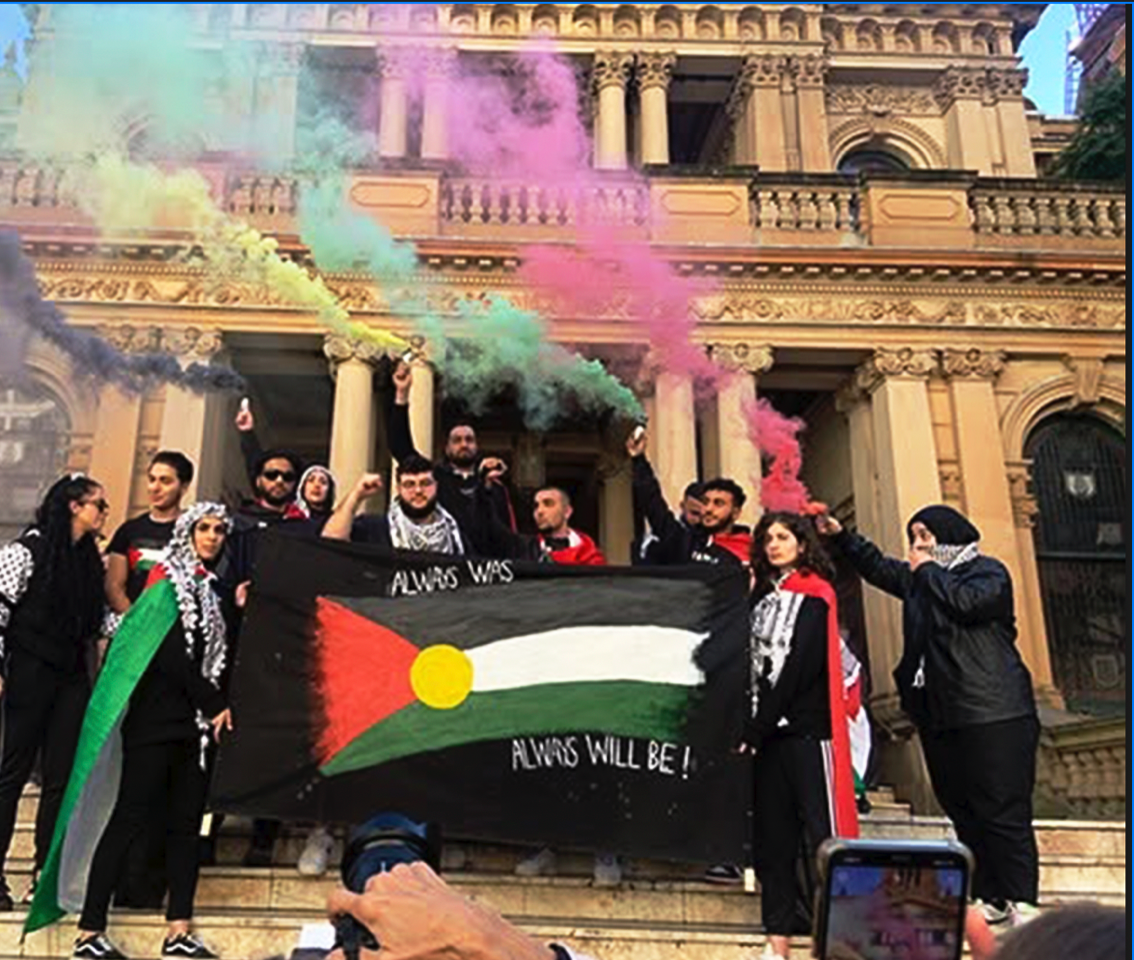
“The philosophers have only interpreted the world, in various ways; the point is to change it.” — Karl Marx
Marx wrote those words in 1845. Nearly two centuries later they remain an indictment not merely of philosophers, but of much of what today passes for the Left.
We have never possessed more commentary. We have podcasts, Facebook pages, petitions, conferences, parliamentary speeches, academic seminars, resolutions, hashtags and demonstrations carefully routed through city streets before everyone goes home.
We can interpret capitalism endlessly! We can describe imperialism! We can denounce fascism. We can document Palestine. Palestine has exposed something much larger than the brutality inflicted upon the Palestinian people. It has exposed the structure of the international political order. The International Court of Justice concluded in its July 2024 advisory opinion that Israel's continued presence in the Occupied Palestinian Territory is unlawful. It is the most horrendous GENOCIDE of the Palestinian people. Yet international institutions, 'our' governments and parliamentary resolutions have repeatedly demonstrated the enormous distance between declaring something illegal and possessing the political power to stop it and the Palestinian Genocide has not simply disappeared. Law without power does not enforce itself. History does not move because the oppressed have demonstrated that they are right. History moves through struggles between material social forces.
The Great Parliamentary Illusion
Again and again we are told: Elect better politicians. Pass another resolution. Write to your MP. Sign another petition. Elect a slightly more progressive government only to find that they are just as bad or are unable to do anything. Lenin criticised this illusion. In The State and Revolution, he described capitalist democracy as: “democracy for the rich”.
The State is not neutral territory
Here lies perhaps the greatest dividing line between revolutionary Marxism and parliamentary reformism. Reformism implicitly treats the existing state as a neutral machine. Win enough votes. Take the controls. Operate the machinery more humanely. Marx and Lenin rejected that conception. For Lenin, capitalist democracy remained constrained by capitalist property and class domination. His formulation was deliberately uncompromising: “Democracy for an insignificant minority, democracy for the rich—that is the democracy of capitalist society.” That argument is more important in the age of concentrated corporate media and enormous digital platforms, not less. Elections occur. -'Governments' change. - But ownership remains. Banks remain. Corporations remain. Military establishments remain. The permanent bureaucracy remains and the institutions through which capital exercises economic power and hegemony remain. Changing the personnel administering the existing structure is therefore not identical with changing the structure.
Revolution cannot be a Facebook page
There is another illusion peculiar to our period. We mistake communication for organisation. Facebook is owned by corporate Zionists and is designed to work in their interests. Facebook may advertise a demonstration (usually the day after, if at all). Social media may distribute an article. A video can reach millions. All of that matters. But none of it is organisation. It cannot substitute for a workplace committee or thousands of organised workers. An algorithm will not construct disciplined democratic organisation among people who know one another, debate strategy, divide responsibilities, develop leadership and act collectively. All power to those who are already doing these things! Lenin understood this problem long before the internet. In What Is To Be Done? he famously wrote: “A newspaper is not only a collective propagandist and a collective agitator, it is also a collective organiser.”
Anger is not organisation
Nor should revolutionary politics be confused with individual acts of violence. What is required is urgent but patient political work in workplaces, Trade unions, Neighbourhoods, Schools and universities. When all else repeatedly fail eventually we will eventually choose 'organisation'. Lenin insisted that revolutionary struggle had to be organised. In What Is To Be Done? he repeatedly attacks spontaneity as an adequate substitute for political organisation.
People make history
Marx rejected both fatalism and fantasy. In The Eighteenth Brumaire he wrote: “Men make their own history, but they do not make it as they please.” That sentence contains an entire revolutionary method. Human beings make history. Capitalism is not eternal. Imperialism is not eternal. Colonial domination is not eternal. The existing state is not eternal.
But people do not choose the circumstances in which they struggle. The purpose of revolutionary theory is not to provide radicals with a more sophisticated vocabulary for describing the world. Its purpose is to illuminate the means by which ordinary people can collectively transform it.
Print Version - new window Email article
-----
Go back
Independence from Imperialism
People's Rights & Liberties
Community and Environment
Marxism Today
International
Articles
| Palestine, Fascism and the Bankruptcy of Parliamentary Socialism |
| Firmus launches what looks to be a great financial bubble |
| Firming up on fictitious capital – Firmus and its capital raising |
| Party’s discussion paper published |
| Notes on Barbarism – The Manifestation of Barbarism with the Decline of US Imperialism |
| Articles by Ted Hill now on our website |
| Financialisation: fictitious capital and its real impact |
| BOOK REVIEW-: The AI Con: How to Fight Big Tech’s Hype and Create the Future We Want |
| BOOK REVIEW—The Eye of the Master: A Social History of Artificial Intelligence |
| Three lies about value |
| US Department of War releases Strategy Document |
| Adventurist Class War Rejecting the Working Class |
| Productivity: of what? from whom? for whom? |
| More on Imperialism and Religion |
| Imperialists used religion to justify their actions |
| Building a New Socialist Society |
| The “three constantly read articles” should still be constantly read. |
| Two new publications to promote study and guide practice |
| Reply to a reader |
| Criticising Xi Jinping Thought |
-----